
Myanmar: Asia and the Pacific: Weekly Regional Humanitarian Snapshot (5-18 May 2026)

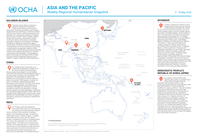
Please refer to the attached Infographic.
INDIA
On 13 May, severe thunderstorms accompanied by heavy rain, hail, lightning and strong winds affected Uttar Pradesh state in northern India, resulting in fatalities, injuries and widespread damage. According to media reports as of 15 May, at least 111 people were killed and 59 injured, with the highest number of fatalities recorded in Prayagraj district. The storms also damaged 227 houses, killed approximately 170 livestock and caused power outages across affected areas. In response, the Government of Uttar Pradesh launched relief and rescue operations, directed local authorities to undertake rapid damage assessments and announced compensation for affected families.
MYANMAR
Civilians in Myanmar continue to face compounded crises driven by ongoing conflict between the Myanmar Armed Forces and non-state armed groups, as well as severe weather impacts across multiple regions and states. In Magway Region, armed clashes in Salin Township since early May have displaced approximately 5,000 people from 15 villages, reportedly killing eight civilians, and damaging or destroying about 300 houses. In Mandalay Region, airstrikes and drone attacks in Ngazun Township on 7 May reportedly killed three civilians, injured four others, and forced an unverified number of people to flee. In Sagaing Region, military operations in Monywa and Paungbyin townships on 8 and 9 May reportedly killed nine civilians, including a child, and destroyed several houses. In Rakhine State, armed clashes in mid-May displaced approximately 3,000 people from several villages in Kyaukpyu Township to Ramree Township. In addition to the conflict, heavy rainfall and strong winds in late April reportedly destroyed more than 100 houses and several public structures, including schools and churches, in several townships in Chin State and Magway Region.
CHINA
On 18 May at 00:21 local time, a 5.2 magnitude earthquake at a depth of 10 km struck northern-central Guangxi Zhuang Autonomous Region in south-eastern China, with the epicentre located approximately 24 km north-west of Liuzhou city. According to the authorities, the earthquake resulted in two fatalities, one missing person and the displacement of more than 7,000 people in Liuzhou. At least 13 buildings collapsed and transport disruptions were reported. The Office of the State Council Earthquake Relief and the Ministry of Emergency Management activated a Level-IV emergency response and deployed a working team to support local relief operations. Authorities also dispatched approximately 10,000 relief items, including tents, folding beds, summer quilts, towel blankets and folding tables and chairs to support emergency response and temporary resettlement operations.
SOLOMON ISLANDS
Tropical Cyclone Maila continues to generate significant humanitarian needs across Western and Choiseul Provinces in the Solomon Islands, with ongoing displacement and sheltering in collective centres and host communities. Initial assessments have identified 161 communities affected in Western province with 31,000 in need of shelter support across both provinces. Humanitarian needs continue to evolve, while access constraints, geographic dispersion and logistical challenges contribute to significant information gaps in remote areas. Protection risks are increasing due to displacement and overcrowding and are further compounded by unexploded ordnance (UXO) contamination, with flooding and erosion exposing ordnance and heightening hazards for affected communities and responders. The Emergency Relief Coordinator has allocated US$2.5 million from the Central Emergency Response Fund (CERF) to support urgent life-saving assistance.
DEMOCRATIC PEOPLE'S REPUBLIC OF KOREA (DPRK)
According to official DPRK state reporting, the country is experiencing a severe spring drought driven by persistent high-pressure systems, high temperatures and critically low precipitation, with early April rainfall (14.3 mm) remaining insufficient to ease conditions. Forecasts indicate continued rainfall deficits and sustained high temperatures, posing risks to food security. In response, the government has mobilised a coordinated multi-sectoral response, including water transport for irrigation, provision of agricultural inputs and logistics support, and measures to maximise irrigation through improved electricity supply. Local authorities, particularly in South and North Hwanghae provinces, are maintaining irrigation systems, managing reservoirs and sluice gates, and reducing water loss, while agricultural workers are implementing drought-resilient farming practices and expanding water access through well-digging and conservation measures.

You May Also Like



![Philippines: Mayon Volcano Summary of 24Hr Observation 21 May 2026 12:00 AM [EN/TL]](https://wedoourbest.org/wp-content/uploads/2026/05/de909eaf-40d4-4ce4-857b-68a31281e907.png)
Bangladesh: South Asia | 2026 Monsoon season multi-model forecast (June-September) – DG ECHO Daily Map | 22/05/2026
![Tonga: Dengue Fever Outbreak Situation Report #22, 22nd May 2026 [EN/TO]](https://wedoourbest.org/wp-content/uploads/2026/05/e64df3cd-73de-4250-ab16-df84d1a581de.png)
DR Congo: For 50 years, women have been over represented in Ebola deaths – UN Women fears the current outbreak will follow the same pattern
DR Congo: Norway contributes NOK 50 million to the WHO Health Contingencies Fund following Ebola outbreak
Mali: Food Security Outlook Update – Reduced food access worsening acute food insecurity in the north and center, April – September 2026
Solomon Islands: Tropical Cyclone Maila – Pacific Humanitarian Team: Situation Report No.4 (19 May 2026)
![Philippines: Mayon Volcano Summary of 24Hr Observation 22 May 2026 12:00 AM [EN/TL]](https://wedoourbest.org/wp-content/uploads/2026/05/02c3bf8e-16be-46bc-b2e5-f50ef7adcd56.png)

![Philippines: Mayon Volcano Summary of 24Hr Observation 19 May 2026 12:00 AM [EN/TL]](https://wedoourbest.org/wp-content/uploads/2026/05/0b574c81-d321-45d0-b73a-8e24ee059885.png)


WHO Weekly Situation Update on Ongoing Health Emergency Events in South Sudan – Week #: 19 ; Date: 15th May 2026

Federated States of Micronesia: Typhoon Sinlaku, Pacific Humanitarian Team (PHT) – Situation Report No. 03 (As of 15 May 2026)
![Tonga: Dengue Fever Outbreak Situation Report #21, 18th May 2026 [EN/TO]](https://wedoourbest.org/wp-content/uploads/2026/05/a38933ca-d472-4ce6-9966-5ed5a719b15f.png)
![Philippines: Mayon Volcano Summary of 24Hr Observation 18 May 2026 12:00 AM [EN/TL]](https://wedoourbest.org/wp-content/uploads/2026/05/e341cffd-b2b6-485e-8b0a-5af04bfe91c4.png)

DIGITAL RIGHTS: ‘The Priority Should Be Holding Tech Companies Accountable, Not Banning Children from the Digital World’

Colombia: Hacia la Dignidad: Rompiendo barreras para la población refugiada y migrante en Puerto Carreño

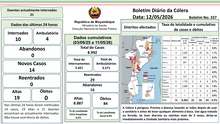
![Mozambique: Boletim Diário da Cólera Data: 12/05/2026 [PT]](https://wedoourbest.org/wp-content/uploads/2026/05/ae32d930-ddb8-4cb2-9741-3f805854e8b6-2.png)

oPt: West Bank Protection Cluster Snapshot | Protection Monitoring | Reporting Period 1 Feb – 30 Apr 2026
![ACAPS Sudan Risk Analysis [2026] (Thematic Report 13 May 2026)](https://wedoourbest.org/wp-content/uploads/2026/05/c5f2f29c-0746-5cb0-af4e-b102e0c53e27.png)

Philippines: The Peace Accords Matrix-Mindanao (Pam-M) and Civil Society Normalization Update Report (September – December 2025)



Ambitious Great Green Wall Shows Slow, Steady Progress in Strengthening Landscapes, Improving Livelihoods
Fermina Stevens: “We want to protect our Indigenous land in Nevada from the dangerous impact of lithium mining”

PHILIPPINES: ‘A Protest Is One Day, but Organising Is the Thousands of Conversations That Make That Day Possible’






VENEZUELA: ‘The Credit Goes to Detainees’ Families, Human Rights Organisations and the International Community’







First workshop of the Deployment and Engagement of Resources and Citizens for European Emergency Response project held in Gelsenkirchen, Germany
World News in Brief: UN humanitarian chief visits South Sudan, shelter fire risks in Gaza, West Bank violence
Heat stress and urban resilience: alternative cooling strategies to combat extreme heat in the urban environment
World News in Brief: Conflict deepens hunger crisis in South Sudan, restrictions hinder aid delivery in Gaza, UN child rights envoy concludes first visit to Syria
The Intergovernmental Oceanographic Commission (IOC) of UNESCO, strengthens public safety through better preparedness with NEAMWave26 tsunami exercise